
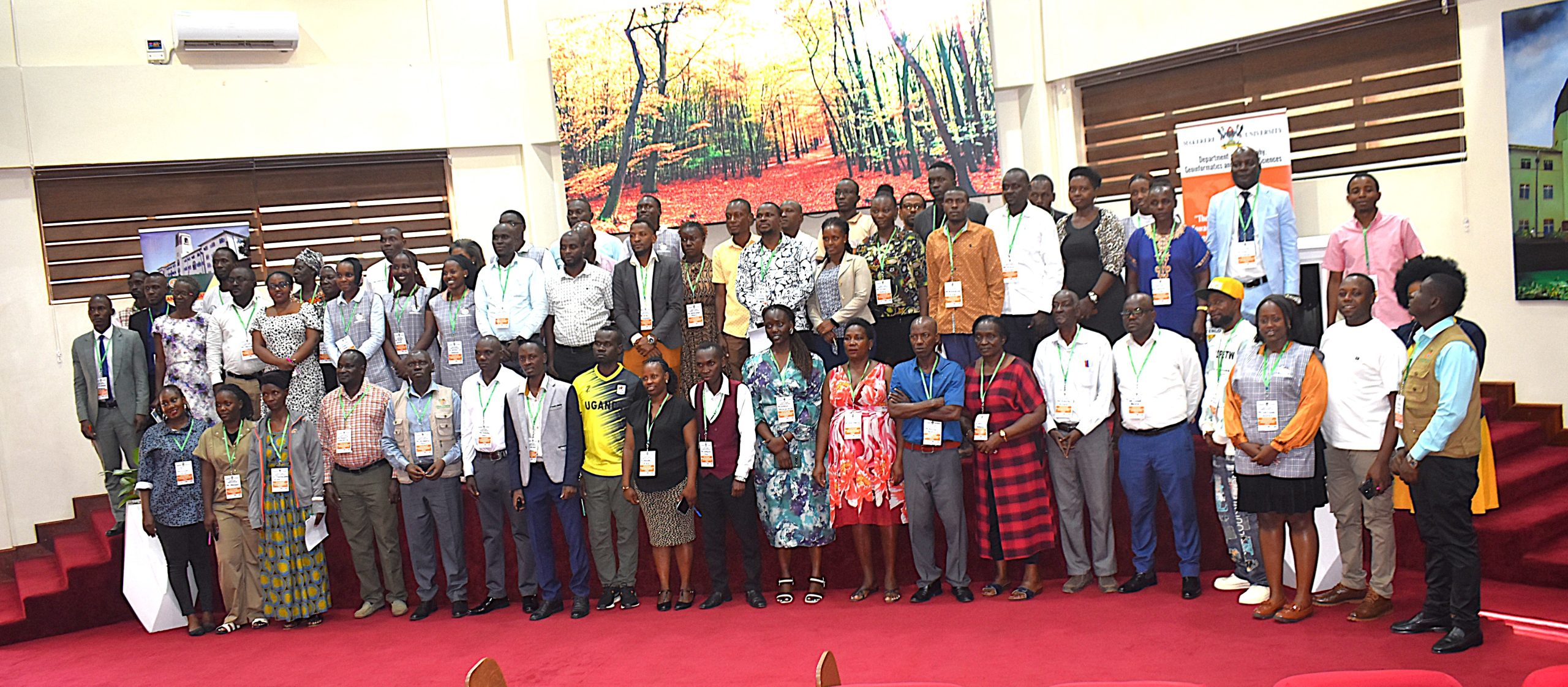
Makerere University, through its Urban Action Lab (UAL), convened the third co-design workshop to identify priority interventions and practical pathways for addressing interconnected challenges of poor waste management, inadequate drainage and flooding in Kampala’s informal settlements.
Held on 5th November 2026 and led by Dr Paul Mukwaya Isolo, the workshop brought together stakeholders from different sectors to explore how improvements in institutional coordination, community engagement, service delivery and infrastructure management could strengthen urban resilience in Bwaise, Makerere Kivulu, Acholi Quarters and Kikubamutwe.
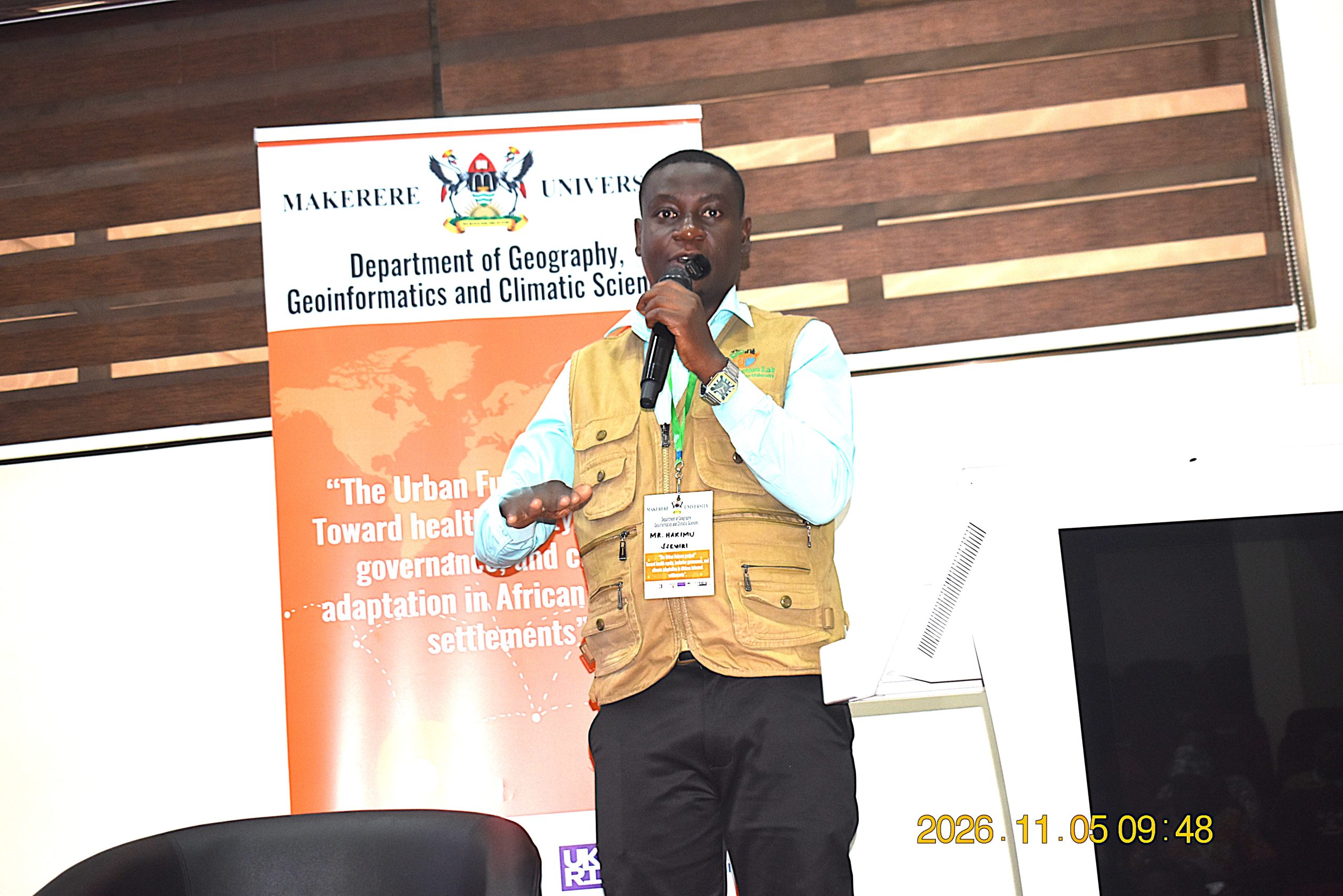
Convened under the Urban Futures Project, the workshop built on two earlier engagements: a community-level systems-mapping exercise held on 1st October 2026 and a city-level validation workshop on 29th October 2026. While the first workshop drew on residents’ experiences to map the challenges and the second incorporated perspectives from city-level stakeholders, the third focused on identifying priority interventions, the changes required to achieve them and the actors and resources needed to support implementation.
From Understanding Urban Challenges to Identifying Solutions
During the workshop, participants reviewed the second version of the composite systems map, which illustrates how population growth, migration, unplanned settlements, weak land-use planning and institutional challenges contribute to poor waste management, inadequate drainage and flooding.
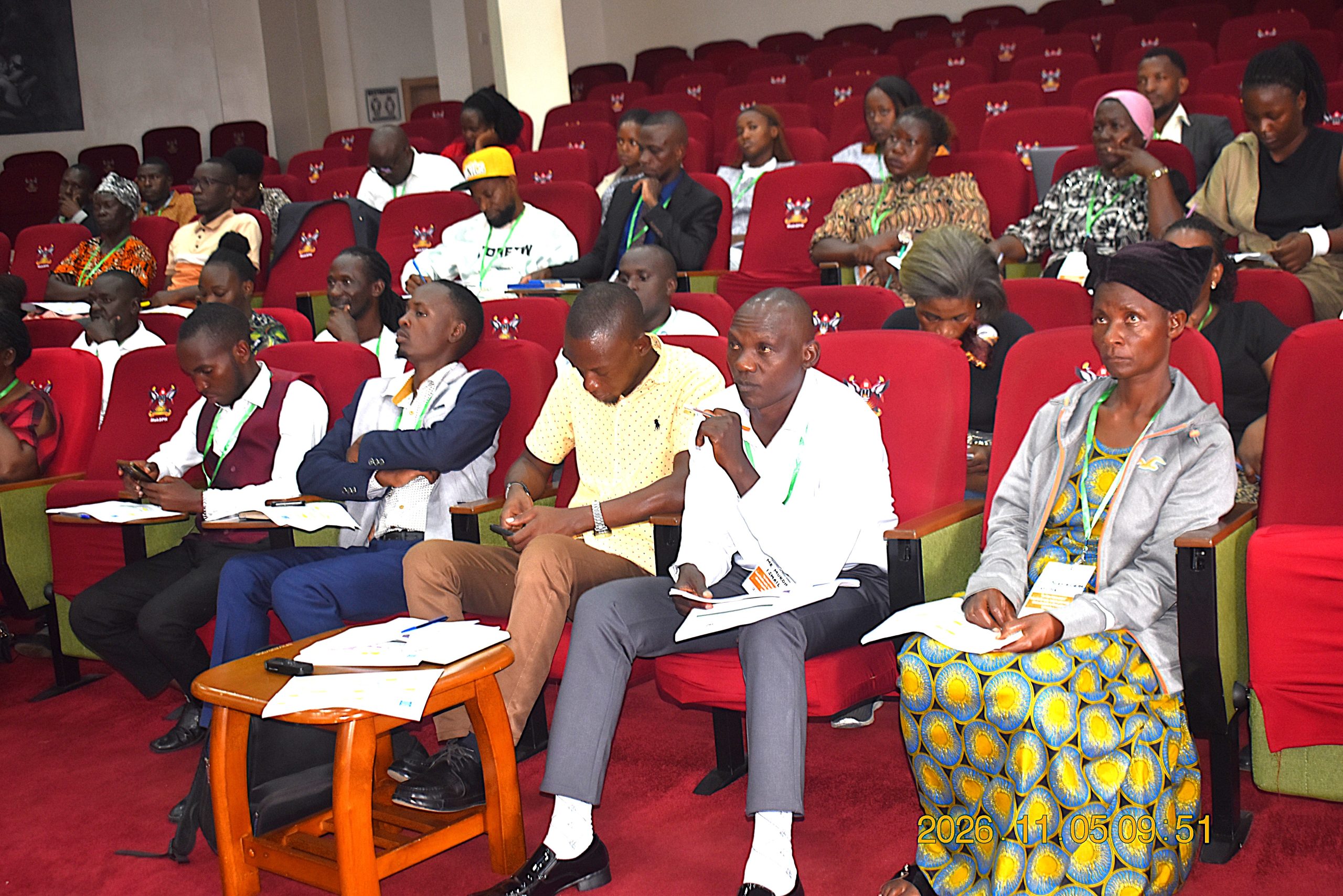
The map illustrates how these challenges are interconnected and reinforce one another. Increasing population and economic activities generate more waste, placing pressure on already inadequate collection services. High collection costs and limited service coverage encourage improper disposal, including dumping waste in drainage channels, obstructing water flows and increasing flood risks.
Flooding, in turn, damages homes, businesses and infrastructure, disrupts transport and livelihoods, and increases the financial burden on low-income households. Repeated flooding also accelerates the deterioration of drainage infrastructure, while inadequate maintenance and delayed repairs perpetuate the problem.
Participants noted that the nature and severity of these challenges vary across the four settlements. Bwaise experiences extensive flooding, while Acholi Quarters faces frequent flooding. Makerere Kivulu is particularly affected in low-lying areas, whereas Kikubamutwe experiences mainly localized waterlogging.
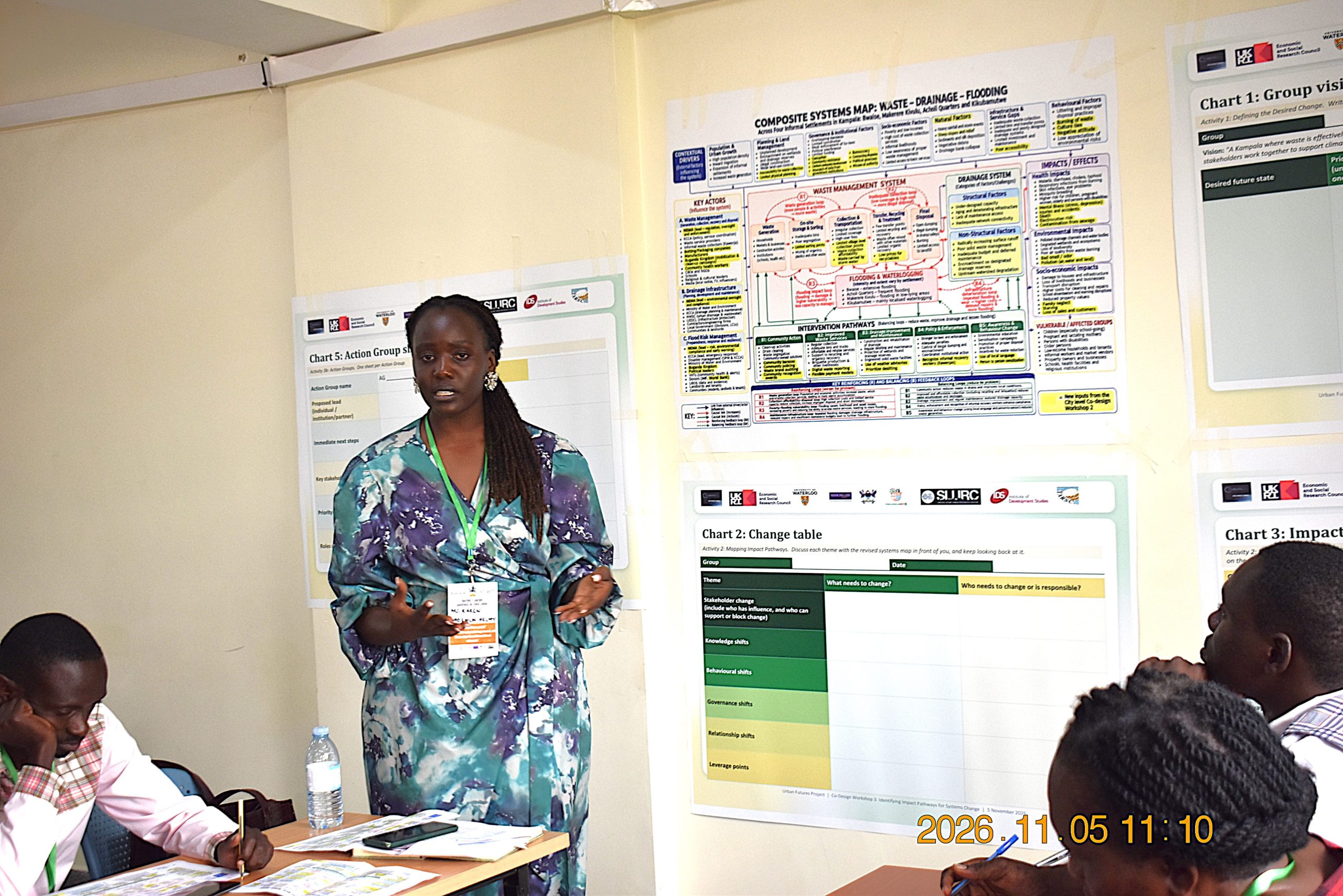
This understanding provided the basis for discussions on where interventions could have the greatest impact and how different actors could contribute to addressing the underlying causes of these challenges.
Co-designing Pathways for Systems Change
A central focus of the workshop was identifying the changes needed to move from understanding the challenges to developing coordinated and actionable responses.
The overall goal was to collectively examine how waste management, drainage systems, flooding, governance, health and livelihoods interact within Kampala’s informal settlements and co-design pathways for improving urban climate resilience.
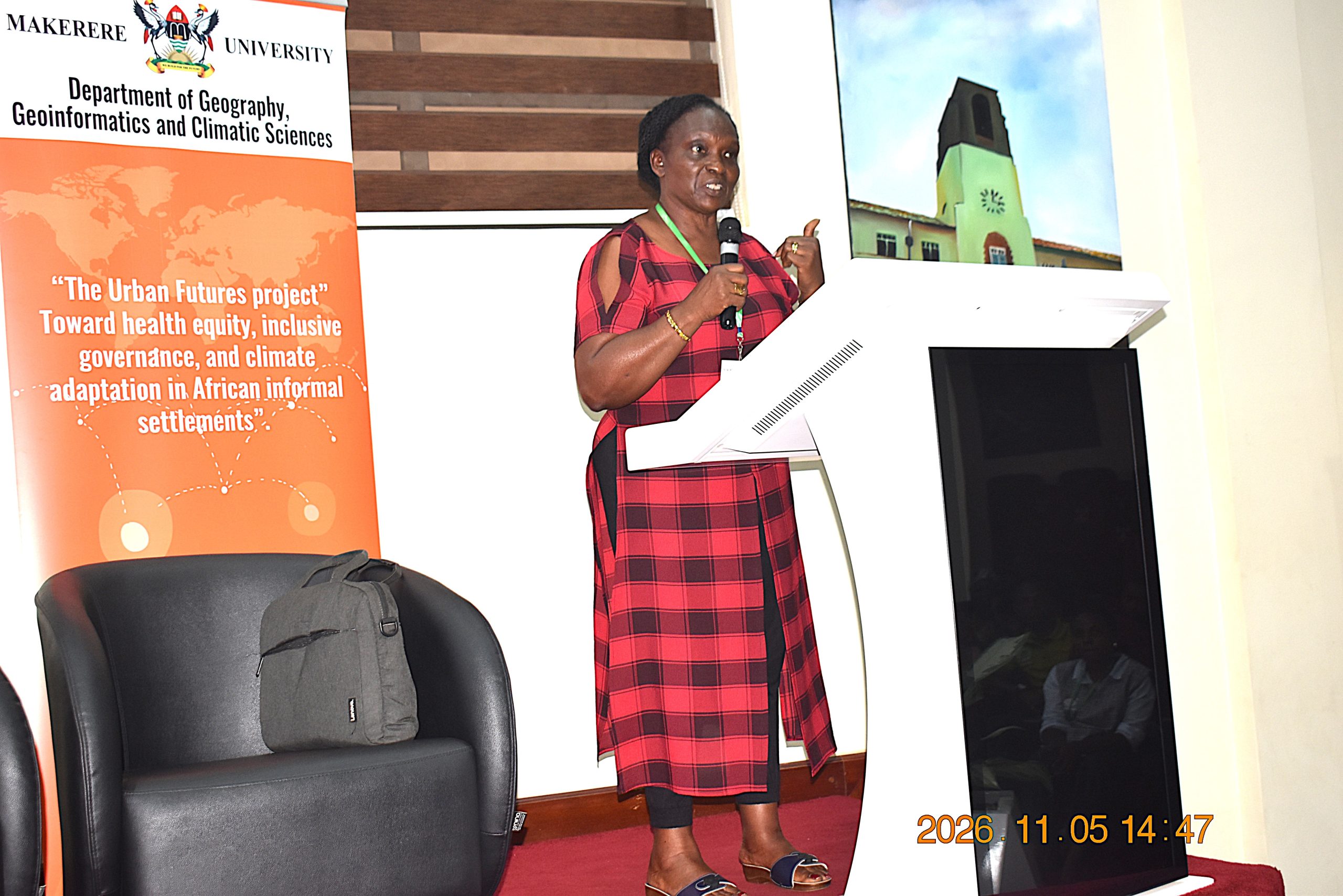
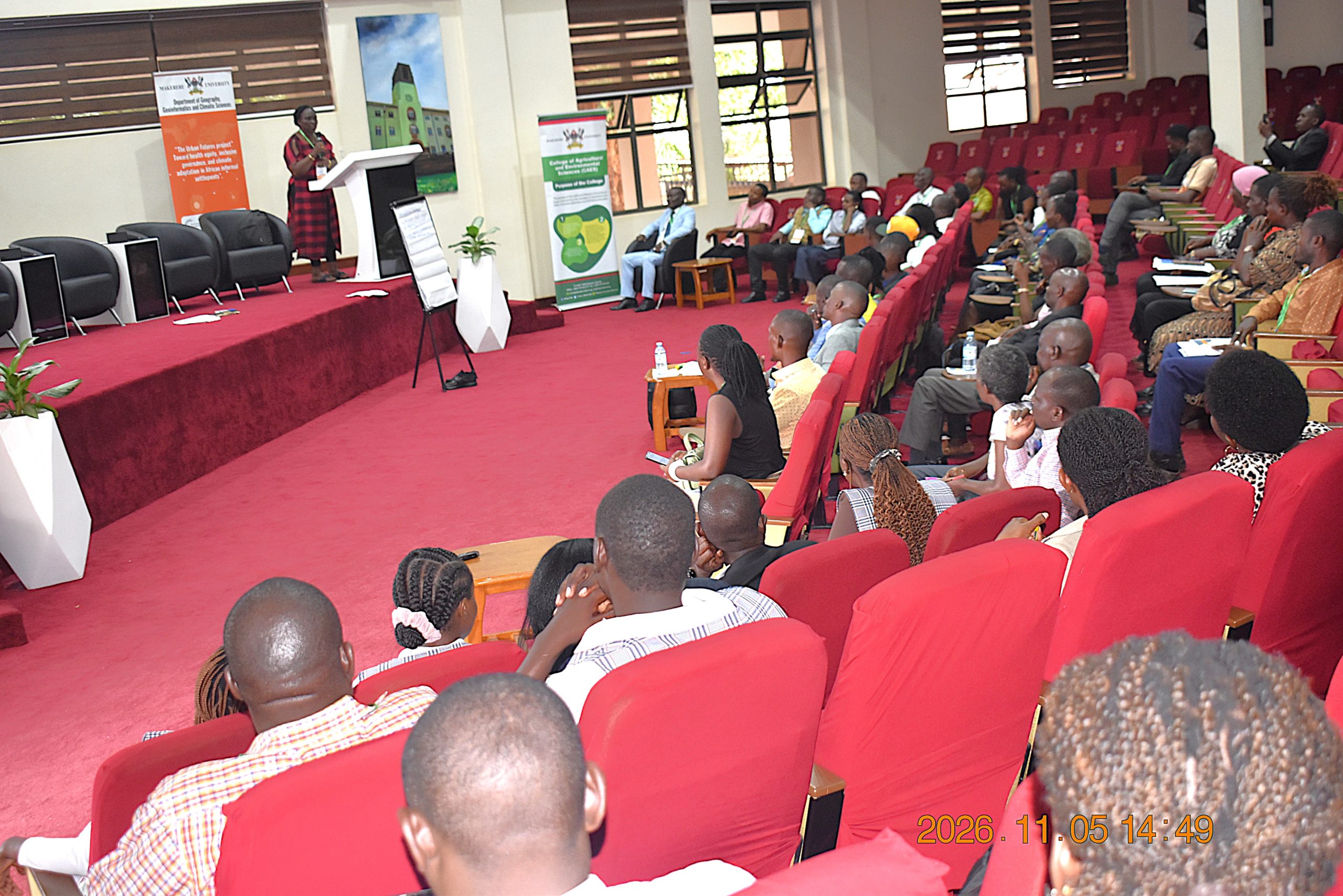
In his presentation, Dr Mukwaya emphasized that understanding how a system operates does not automatically lead to change. He challenged participants to identify where interventions are needed, who needs to take action and how the proposed changes can be achieved.
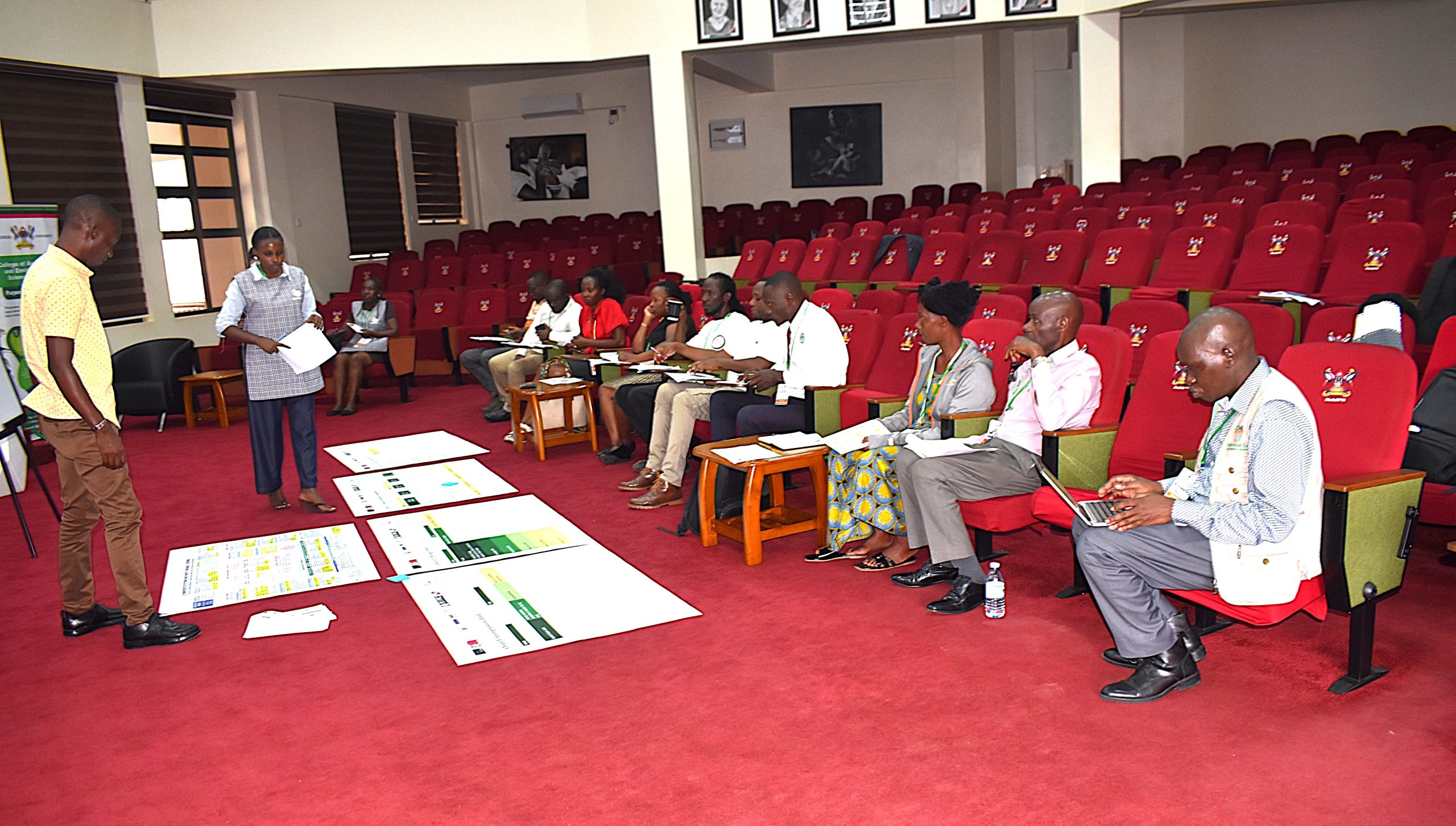
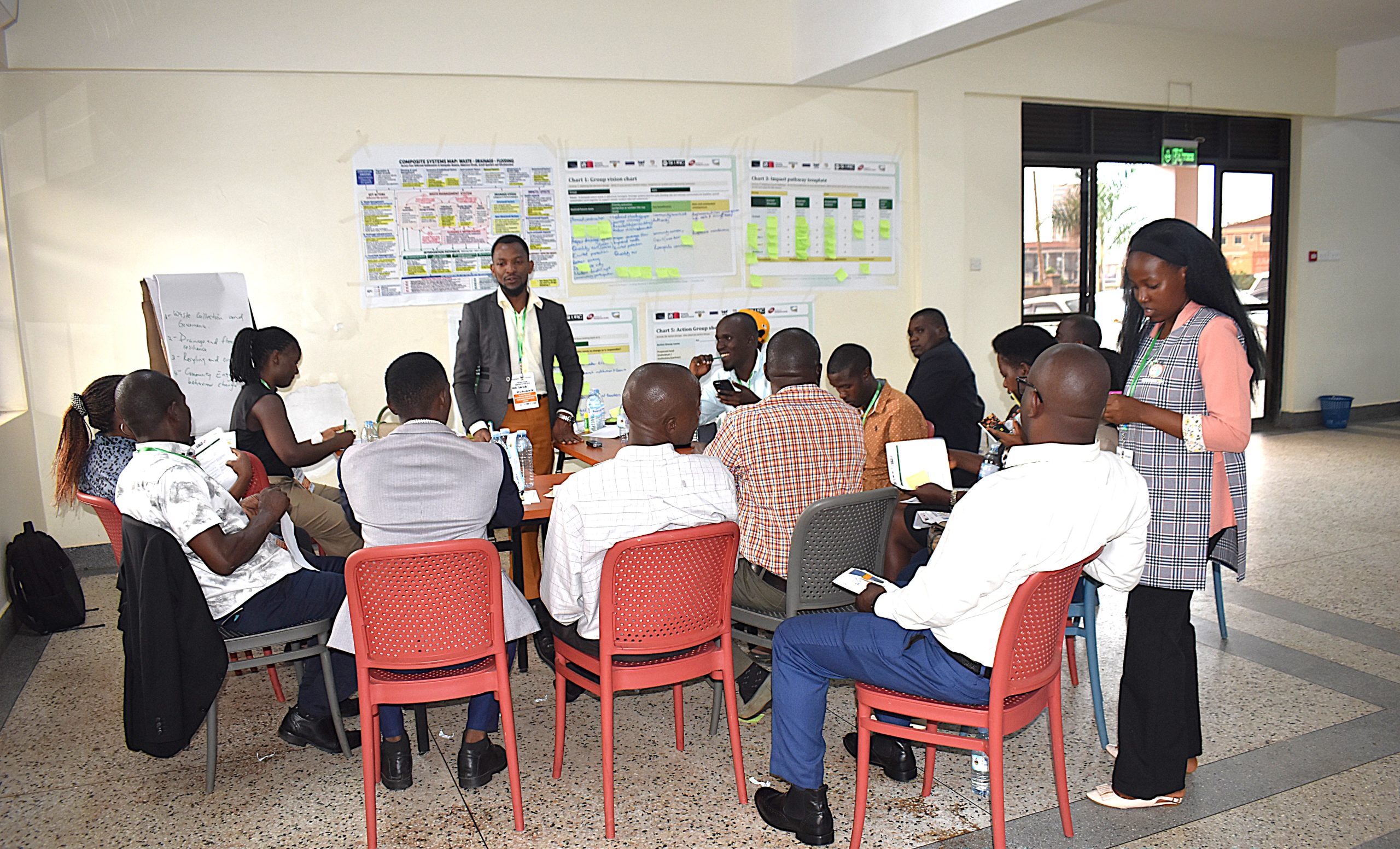
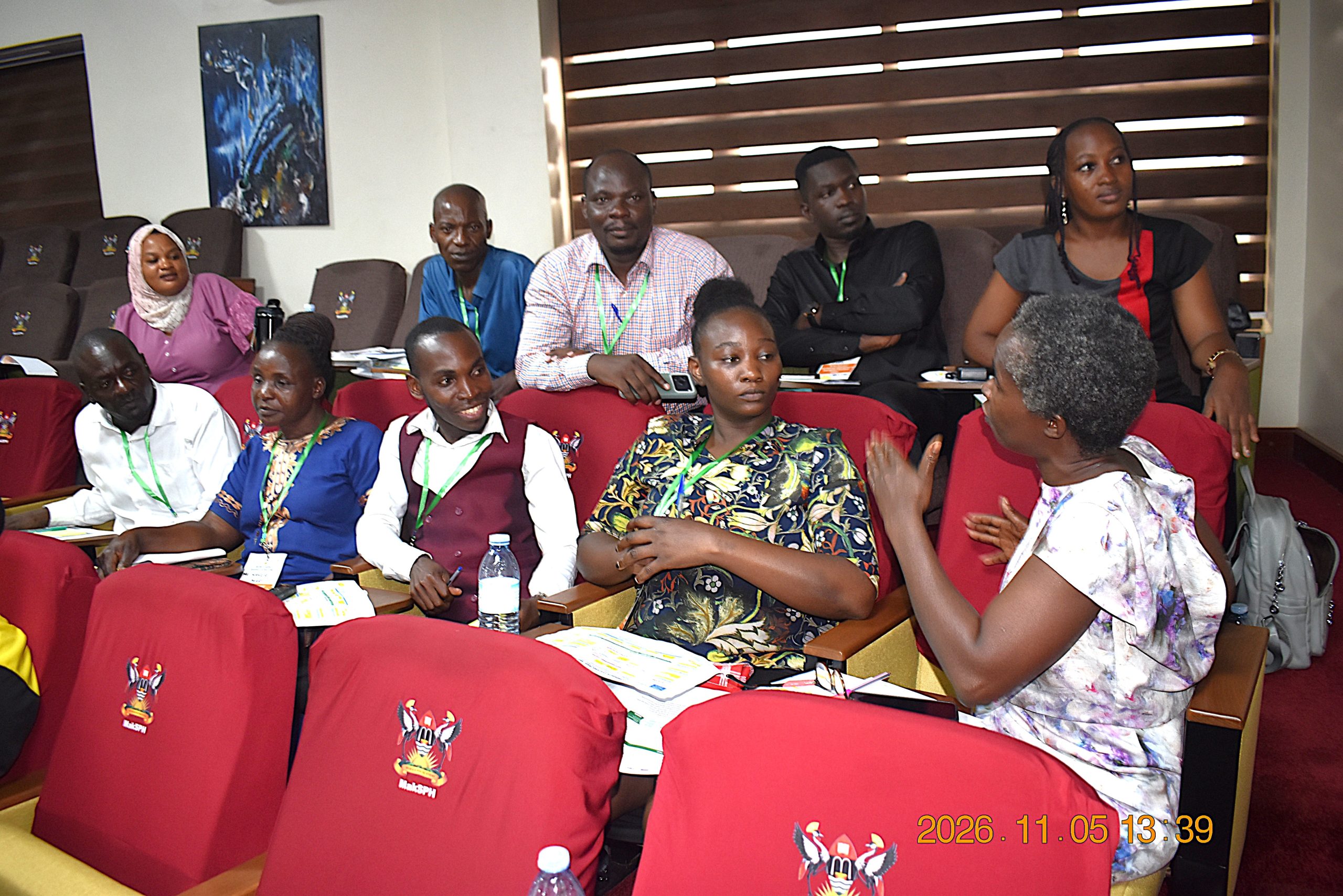
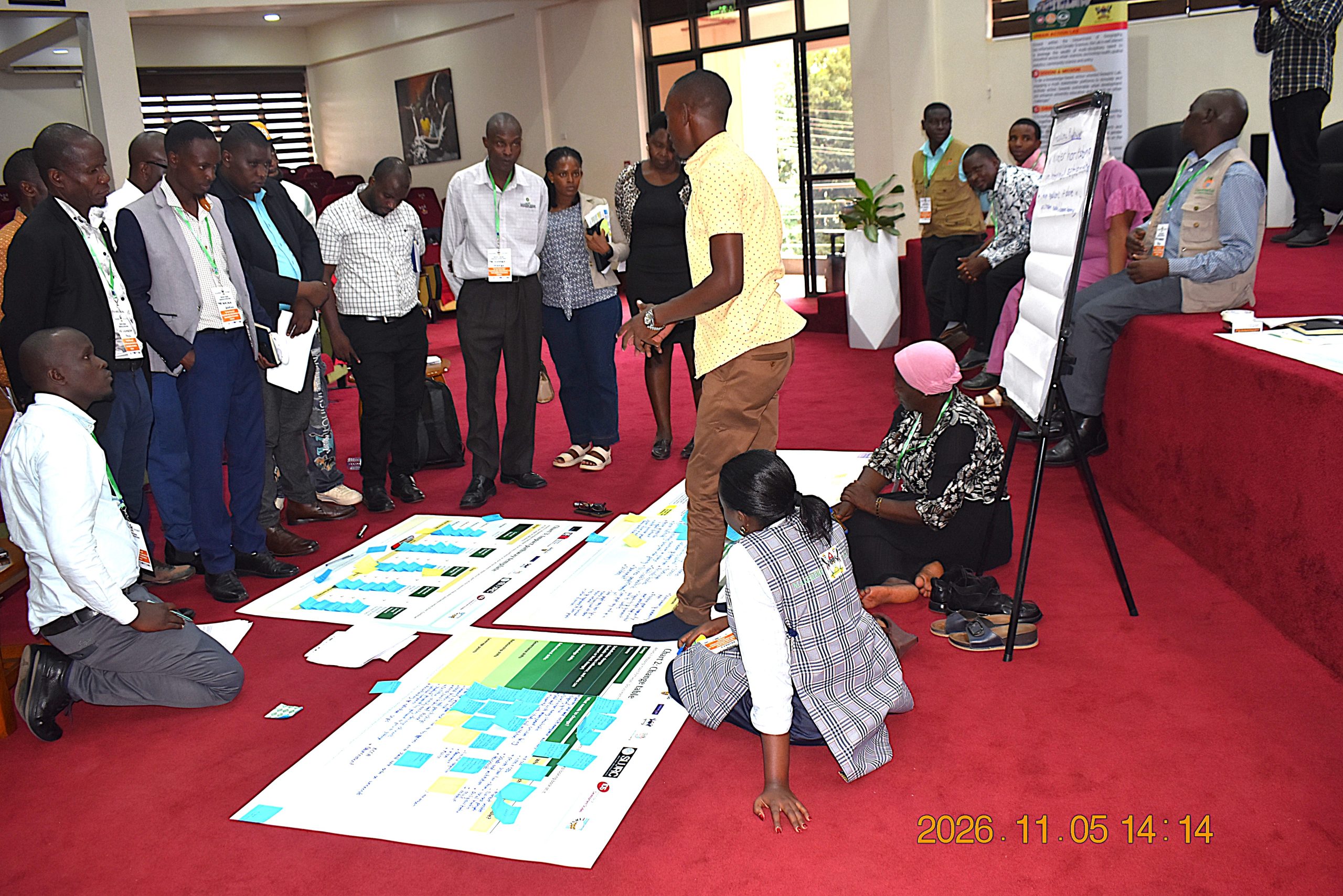
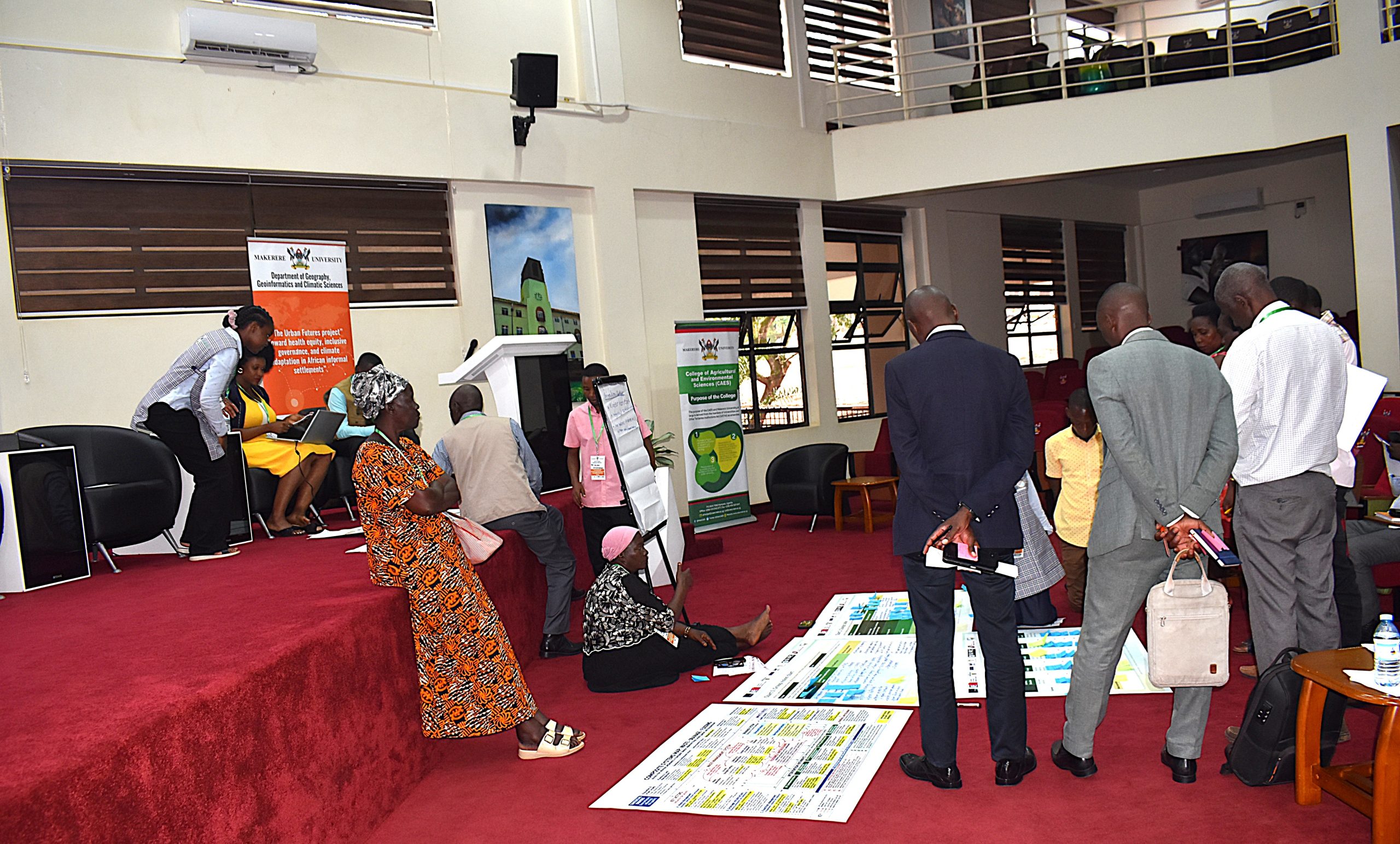
Through facilitated group discussions, participants explored what a more resilient waste management and drainage system would look like, the changes required to achieve it, the stakeholders responsible and the resources needed to support implementation.
Five interconnected areas emerged as priorities for intervention: community action, improved waste services, drainage infrastructure and maintenance, policy and enforcement, and awareness and behaviour change.
Under community action, proposed interventions included regular clean-up activities, clearing drainage channels, waste segregation, community barazas, local policing and initiatives to promote responsible waste disposal.
For waste services, participants identified the need for regular and affordable waste collection, adequate collection bins and trucks, accessible collection points, improved recycling and organic waste recovery. They also explored alternative livelihood opportunities, including briquette production, and the use of digital platforms to report waste management challenges.
On drainage, participants proposed constructing and rehabilitating drainage channels, regular desilting, improved maintenance and protecting wetlands and designated drainage reserves. They also highlighted the importance of weather advisories to strengthen community preparedness for heavy rainfall and flooding.
Governance-related interventions centered on stronger enforcement of environmental regulations and local by-laws, improved coordination among responsible institutions, adequate penalties for illegal dumping and encroachment, and greater recognition of informal waste recovery workers.
Participants also underscored the importance of sustained awareness and behaviour change through environmental education, community sensitization in local languages, person-to-person engagement and incentives that encourage responsible waste management practices.
Strengthening Institutional and Community Collaboration
The discussions further examined the responsibilities of different institutions and community actors in implementing the proposed interventions.
Key institutions identified included the National Environment Management Authority (NEMA), Kampala Capital City Authority (KCCA), the Ministry of Water and Environment, the National Water and Sewerage Corporation (NWSC), local governments, waste service providers, community-based organizations and non-governmental organizations.
The Buganda Kingdom, community leaders, schools, religious institutions, community health workers, landlords, tenants and informal waste collectors were also recognized as important actors in mobilizing communities and supporting local interventions.
Participants observed that overlapping institutional mandates, limited coordination, inadequate funding, weak enforcement, bureaucratic processes and insufficient community involvement can undermine efforts to improve urban services. They therefore emphasized the need for clearly defined responsibilities, stronger institutional relationships and meaningful community participation.
Addressing Health, Environmental and Livelihood Concerns
Participants also considered the wider implications of poor waste management, inadequate drainage and recurrent flooding, particularly for vulnerable groups.
Health concerns included malaria, diarrhoeal diseases, cholera, typhoid, respiratory infections associated with waste burning, skin infections and injuries. Children, pregnant and lactating mothers, older persons, persons with disabilities and low-income households were identified as particularly vulnerable.
Environmental concerns included pollution of drainage channels and water bodies, wetland degradation, poor air quality and loss of biodiversity. On the socio-economic front, participants highlighted damage to homes and infrastructure, disruption of businesses and transport, loss of income, increased cleaning and repair costs, and interruptions to children’s education.
These concerns reinforced the need for integrated interventions that address waste management and drainage not merely as service delivery issues, but also as priorities for public health, environmental protection and inclusive urban development.
Translating Proposed Interventions into Action
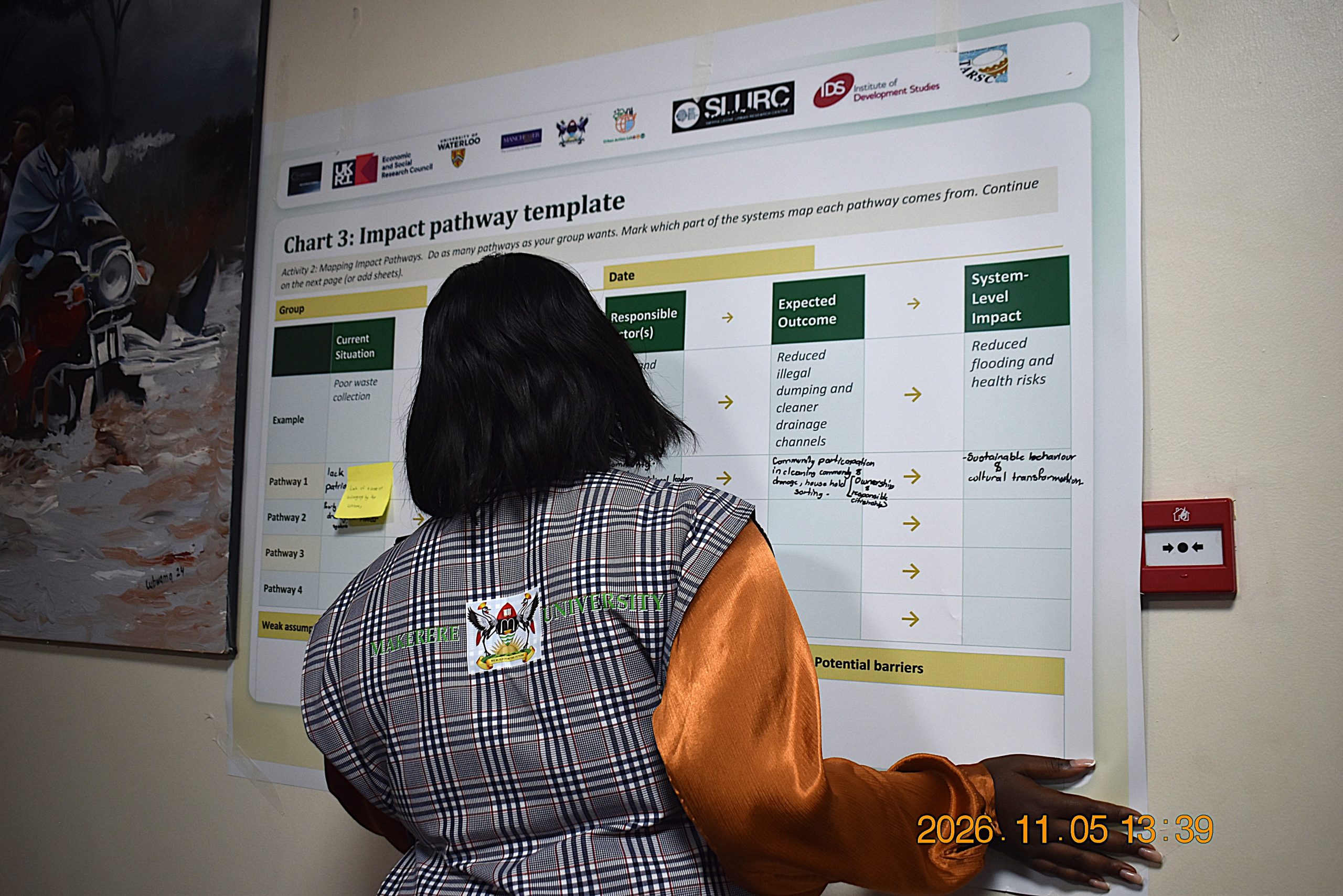
To move the process towards implementation, the third workshop was structured around five key activities: defining the desired change, mapping impact pathways, reviewing the proposed pathways through a World Café exercise, mapping available resources and forming Action Groups.
Participants began by developing a shared vision of Kampala’s informal settlements as places where waste is effectively managed, drainage systems function properly, flood risks are reduced, communities are healthier and stakeholders work together to strengthen climate resilience.
They subsequently mapped the changes required to achieve this vision, identified the actors and resources needed, and reviewed and strengthened the proposed pathways through collaborative discussions.
A resource-mapping exercise enabled participants to identify existing assets, gaps and potential partnerships that could support the proposed interventions. The formation of Action Groups provided a basis for organizing stakeholders around priority intervention areas and identifying immediate next steps.
The third workshop consequently marked an important transition in the Urban Futures Project, from jointly diagnosing urban challenges and understanding their underlying causes to identifying interventions, building partnerships and organizing stakeholders for collective action.
The process will continue with a fourth workshop focused on translating the proposed impact pathways into action packages, validating the pathways, agreeing on stakeholder responsibilities and establishing mechanisms for tracking progress towards improved waste management, stronger drainage systems and more climate-resilient communities in Kampala.
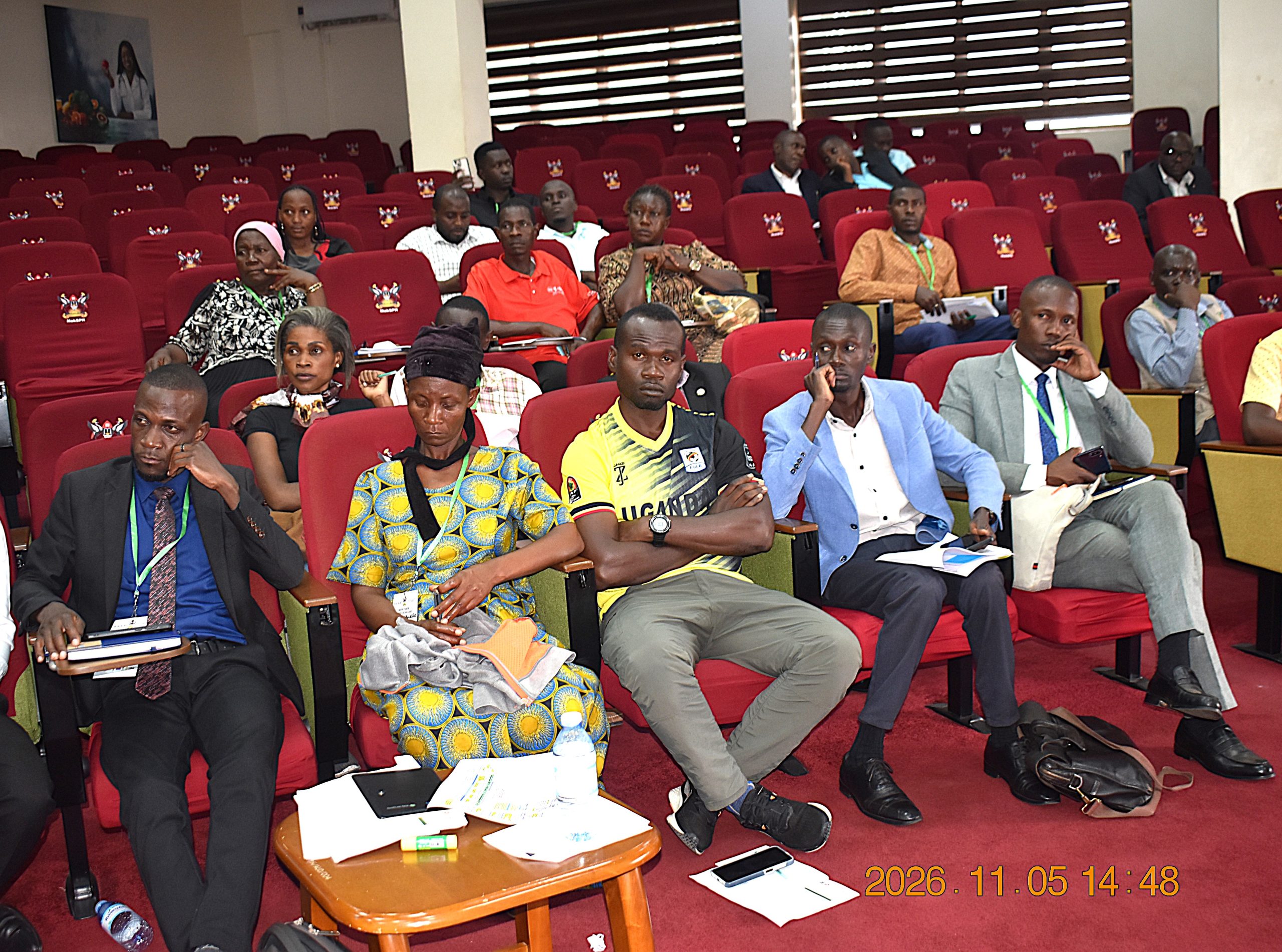
Through the Urban Action Lab, Makerere University is advancing the Urban Futures Project’s broader objectives of promoting health equity, inclusive governance and climate adaptation in African informal settlements by bringing together research, institutional perspectives and community knowledge to inform locally grounded responses to urban challenges.
Link to event pictorial:
https://drive.google.com/drive/folders/1VcNbnRiwuEU0wGmGl4yH8M-NhuOffjqH?usp=sharing