Mak’s Urban Action Lab Develops Community-Specific Maps to Improve Risk Management in Kampala’s Informal Settlements
Led by Dr. Paul Mukwaya Isolo, Coordinator of the Urban Action Lab, the workshop sought to develop a community-led map of urban risks grounded in the experiences and perspectives of people living and working in informal settlements.
Mak Strengthens Kasese, Mbale Urban Food Systems through Cross-City Learning
Farmers from Mbale City have gained new approaches to strengthening urban food production following a four-day learning exchange programme in Kasese Municipality and Kabarole District.
Makerere Students Win Inter-University Tourism Quiz Competition
Friday 18th September 2026, the Ministry of Tourism, Wildlife and Antiquities, Makerere University Business School (MUBS) and the Uganda Tourism Board held a workshop on a theme “ Digital agenda, artificial intelligence to redesign tourism”.
Call for Abstracts – 4th International GORILLA Conference 2026
The Organizing Committee of the 4th International Conference on Geographical Science for Resilient Communities, Ecosystems and Livelihoods under Global Environmental Change (GORILLA) invites researchers, practitioners, policymakers and other stakeholders to submit abstracts for oral and poster presentations. The conference will be held from 30th November-4th December 2026 at the Commonwealth Resort Munyonyo, Kampala, Uganda.
CAES Freshers Urged to Embrace Academic Excellence to Become Agents of National Transformation
Orientation is an important first step in helping newly admitted students transition into a new academic and social environment. Beyond introducing students to institutional structures and services, orientation provides an opportunity to set expectations, clarify responsibilities and inspire students to approach their university journey with purpose.
CAES Annual Report 2025
It is with great pride, gratitude, and a renewed sense of purpose that I present the 2025 Annual Report of the College of Agricultural and Environmental Sciences (CAES), Makerere University.
Makerere University, Global Partners Strengthen Biodiversity Education & Research Through Innovation & Field-Based Learning
*****Through a project titled “Strengthening Education and Research Capacity for Enhancing Biodiversity Conservation and Sustainable Natural Resources Use,” Makerere University, in partnership with Rhine-Waal University of Applied Sciences (Germany) and the Central University of Technology (South Africa), has achieved significant milestones in advancing biodiversity conservation education, research capacity, and sustainable natural resource management. The project team disseminated their findings and achievements on 31st July 2026.
Call for Applications for PhD Positions in Dairy Nutrition & Agroforestry
***Call for Applications for PhD positions in Dairy Nutrition & Agroforestry under the VLIR-UOS TEAM 2026 Project – Agroforestry-dairy integration for Sustainable Agri-food Systems in Peri-urban and Rural Systems in Uganda ***
TORCH Project Living Lab Drives Clean Energy Innovation & Climate Action in Luwero
Emission Society in East Africa) is a collaborative initiative designed to help communities respond to climate change through practical innovations, research, and inclusive partnerships. Implemented across Uganda, South Sudan, and Austria.
Prof. Isa Kabenge Officially Hands Over Leadership of DABE to Prof. Joshua Wanyama
Prof. Isa Kabenge has officially handed over leadership of the Department of Agricultural and Biosystems Engineering (DABE) at the College of Agricultural and Environmental Sciences (CAES), Makerere University to Prof. Joshua Wanyama.
TRIBUTE TO PROFESSOR ABWOLI YABEZI BANANA (1951–2026)
It is with profound sorrow and a deep sense of loss that the Makerere University community mourns the passing of Prof. Abwoli Yabezi Banana, an outstanding scholar, teacher, researcher, mentor, and academic leader whose life was dedicated to the pursuit of knowledge...
Makerere University, Uganda Red Cross Society Sign MoU to Advance Research, Training & Humanitarian Action
Makerere University and Uganda Red Cross Society (URCS) have signed a Memorandum of Understanding (MoU) aimed at strengthening collaboration in research, training, innovation, and humanitarian service delivery.
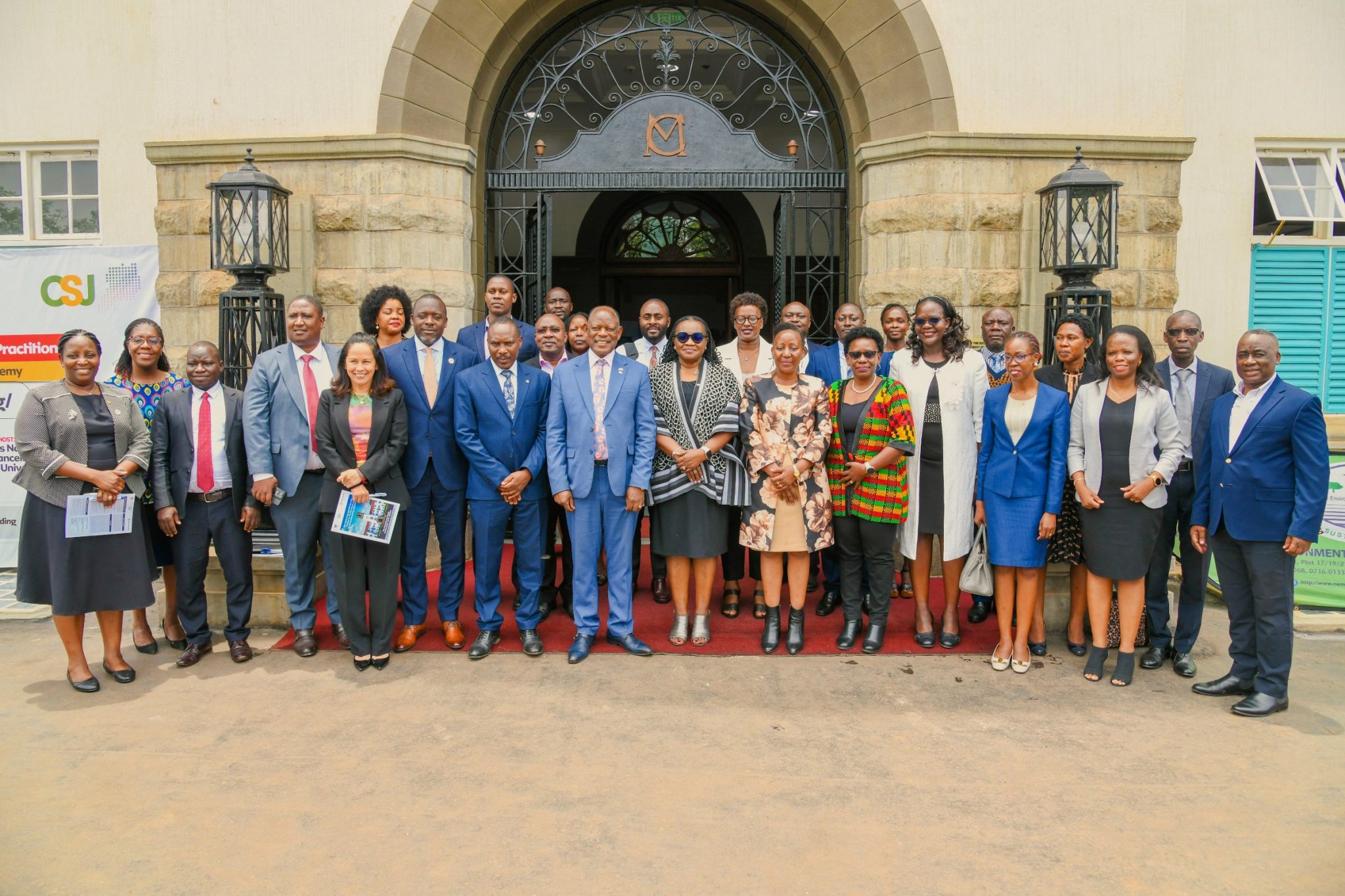
CAES Engagement with Mak Senior Management: VC Calls for Expansion of PhD Training to Accelerate Development in Africa
Makerere University Vice Chancellor, Prof. Barnabas Nawangwe, has called for a renewed focus on graduate training...
MakCAES Develops Agroecology Curriculum to Drive Food Systems Transformation in East Africa
Makerere University College of Agricultural and Environmental Sciences (CAES) is developing an agroecology curriculum...