Makerere University, in partnership with local, regional, and international institutions, is advancing climate-smart agriculture and sustainable livelihoods through the TORCH Project – Towards a Clean Energy and Zero-Emission Society in East Africa: Strengthening Academic and Community Collaboration in Outreach, Training, and Research for Green Growth and a Healthy Environment.
TORCH is a collaborative initiative designed to help communities respond to climate change through practical innovations, research, and inclusive partnerships. Implemented across Uganda, South Sudan, and Austria, the TORCH Project is focused on strengthening academic and community collaborations in outreach, training, and research aimed at building a cleaner energy future and a zero-emission society. In Uganda, one of the flagship interventions is the establishment of a Living Lab in Kabale District, Kamuganguzi Sub County Nyabumba Village, where farmers, students, researchers, and development partners are working together to test and demonstrate environmentally friendly technologies that can improve household welfare while reducing greenhouse gas emissions.
A Community-Centred Response to Climate Change
The Living Lab model places communities at the centre of innovation. Rather than introducing externally designed solutions, the project works directly with local households to identify challenges affecting their livelihoods and co-create practical responses suited to their environment.
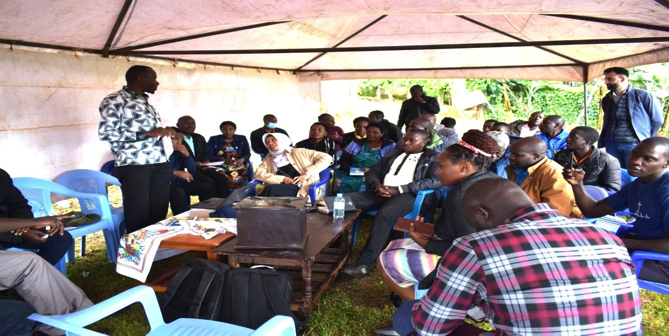
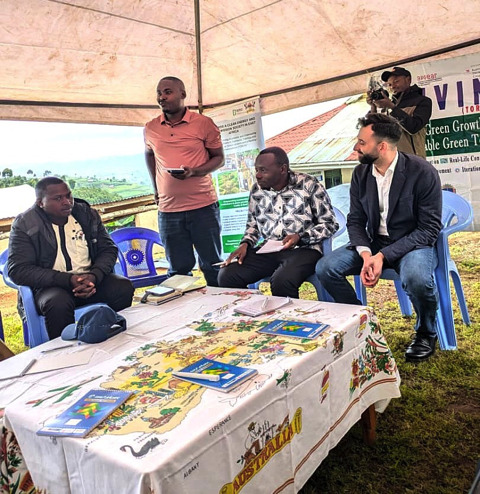
A project monitoring and progress review meeting was held on 27 April 2026 in Kabale, bringing together key stakeholders to assess achievements, review ongoing activities, and plan the next phase of implementation. Participants included representatives from Makerere University, BOKU University (Austria), Kabale University, Youth Go-Green, as well as students, researchers, farmers, and community leaders.
Addressing the participants, Dr Patrick Musinguzi, Principal Investigator from Makerere University, explained that climate change is no longer a distant concern but a present-day challenge affecting every sector of society, including agriculture, health, energy, and livelihoods.
He said the TORCH Project seeks to support communities with solutions that progressively reduce greenhouse gas emissions while improving resilience and productivity. “The project is about greenhouse gas emissions. We need to see how to progressively reduce or cut down the emissions,” Dr Musinguzi said.
He further observed that universities have a responsibility to generate knowledge that solves real community problems and supports sustainable national development.
Practical Technologies Already Transforming Rural Households
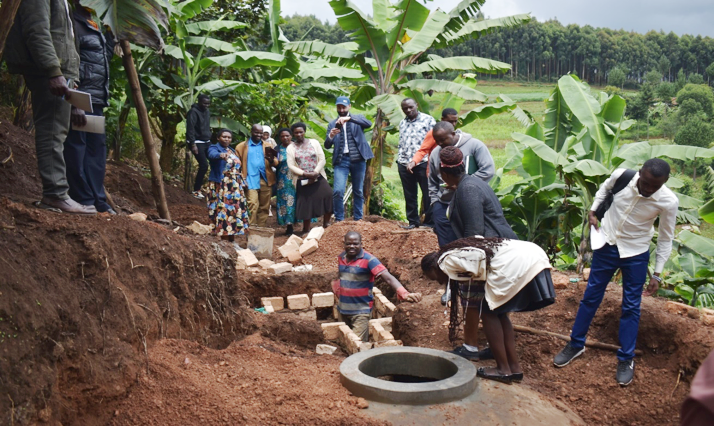
The Kabale Living Lab has identified several priority technologies based on the specific needs of farming households in the area. According to Prof. Phelix Mbabazi Businge, the Project Coordinator from Kabale University, four technologies were prioritized after consultations with the host family and surrounding community.
These include:
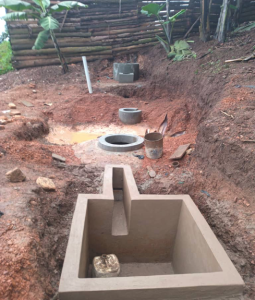
- Biogas Systems
The biogas technology is to convert animal and organic waste into clean cooking fuel, reducing dependence on firewood and charcoal while lowering indoor air pollution. It will also provide nutrient-rich slurry that can be used as organic fertilizer.
- Woodlots
A woodlot of 500 trees (Calliandra, Grevilia and Gliricidi) was planted. The establishment of the woodlots is to promote sustainable fuelwood production, restores degraded land, and contribute to carbon sequestration. This will help reduce pressure on natural forests.
- Food Warming Baskets
These traditional but energy-efficient baskets help retain heat in cooked food, reducing the need for repeated reheating and minimizing fuel consumption.
- Rainwater Harvesting Tanks
Water harvesting systems improve access to clean water for domestic use, livestock, and small-scale farming, especially during dry periods.
Assoc. Prof. Busingye reported that implementation of these technologies is progressing steadily and that the host farmer has already expressed satisfaction with the impact of the project.
He called upon local residents to continue supporting students and researchers who will be using the site as a learning and demonstration centre even after the project officially closes.
Empowering Youth as Drivers of Green Transformation
Recognizing that youth are central to future sustainability, the TORCH Project has partnered with Youth Go-Green, an organization working to mobilize young people around environmental conservation, entrepreneurship, and community development.
Speaking during the meeting, Mr. Muhumuza Edwin, the organization’s coordinator, said Youth Go-Green currently works with more than two million young people across Uganda through national and regional structures.
He stressed that agriculture remains one of the most strategic sectors for youth employment and economic transformation.
“Farming is one of the key priority areas that we need to emphasize and improve,” he said.
He encouraged young people and community members to actively participate in the project and support one another in adopting sustainable farming practices.
Host Farmer Shares Life-Changing Experience
At the centre of the Kabale Living Lab is Mr. Charles Byarugaba, the host farmer whose home now serves as a practical learning site for the community.
Mr. Byarugaba explained that before engaging with the TORCH Project, farming in the area was often done without planning, resulting in low productivity, inefficiency, and financial losses.
“Traditionally, I used to engage in unplanned business and farming. We would benefit little or find ourselves at the losing end before we started working with the TORCH Project,” he said, noting that the project had introduced him to better planning, enterprise management, and more sustainable farming methods. Beyond his own household, he sees the Living Lab as an opportunity for the wider community to learn improved practices that can reduce poverty, improve nutrition, and create more reliable incomes.
Mr Byarugaba expressed appreciation to the project partners for selecting his farm as a demonstration site and pledged continued cooperation.
Research that Begins With Communities
Mr. Andreas Bauer, a representative from the Institute of Development Research at BOKU University, highlighted the TORCH Project’s unique participatory research approach.
He explained that unlike conventional research models where experts first define scientific questions and later seek communities to test them, TORCH starts by listening to people.
“Before we come up with a research question, we talk to the community and see what their issues are in their livelihoods. We ask what should be done to make a difference in the local communities,” he said.
This method ensures that research outputs are relevant, inclusive, and responsive to the real needs of farmers and households.
The model also provides students with valuable field-based learning opportunities, exposing them to applied research, stakeholder engagement, and innovation for development.
Strengthening Academic Partnerships Across Borders
The TORCH Project demonstrates the power of cross-border academic collaboration in solving pressing development challenges. Key partner institutions include: Makerere University, BOKU University (Austria), Kabale University, Kyambogo University, Busitema University and University of Juba
Together, these institutions are combining expertise in agriculture, climate science, energy systems, community engagement, and higher education to build solutions that can be replicated across East Africa.
Way Forward
As implementation continues, stakeholders reaffirmed their commitment to expanding successful interventions, increasing community participation, and strengthening research outputs that support sustainable development.
For Makerere University, the TORCH Project reflects the institution’s broader commitment to research excellence, innovation, and community transformation. By connecting academic knowledge with local realities, the University is helping communities build resilience against climate change while creating pathways to cleaner energy, food security, and inclusive growth.
With climate pressures increasing across the region, the Kabale Living Lab stands as a strong example of how universities and communities can work together to shape a more sustainable future.