
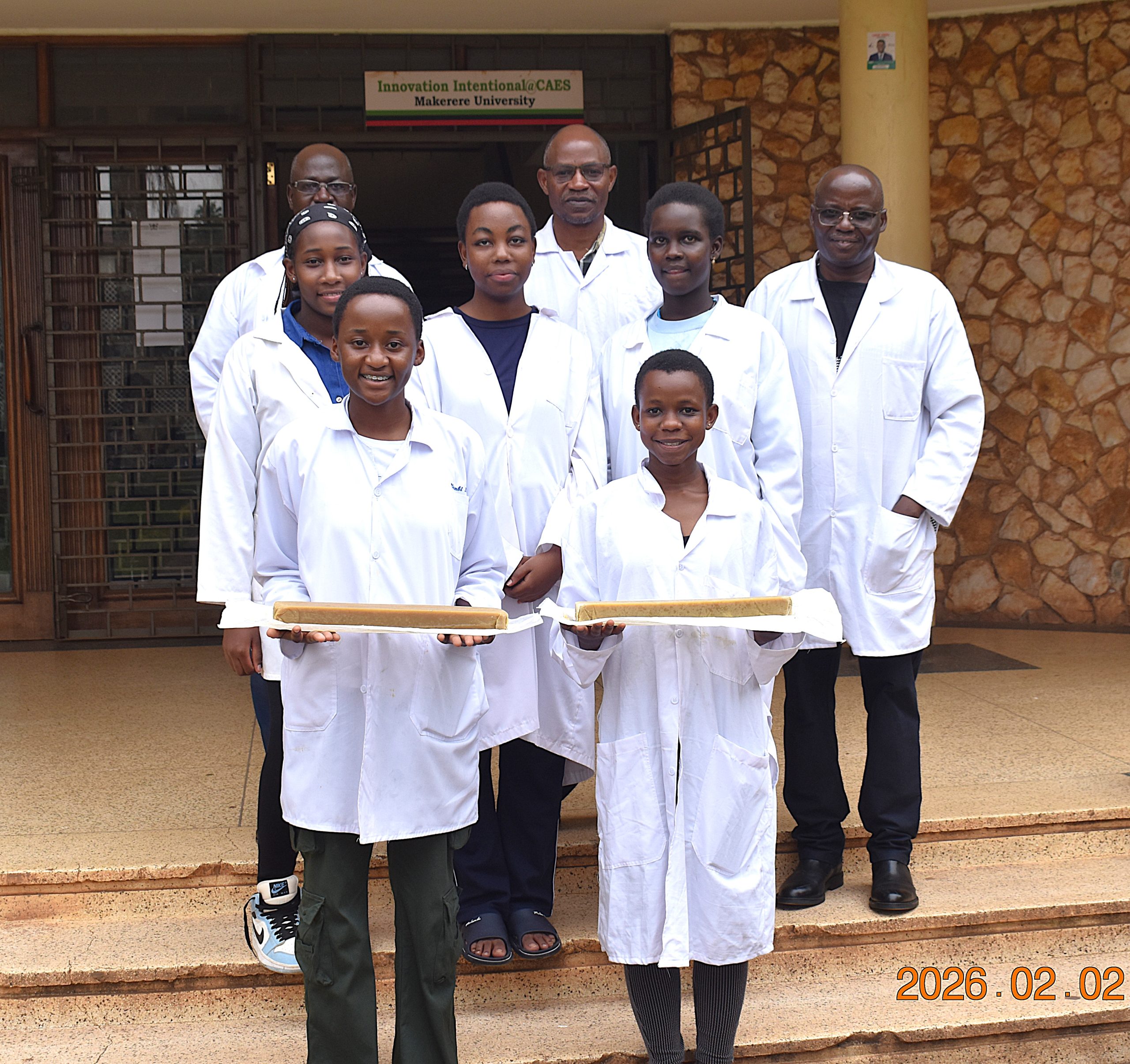
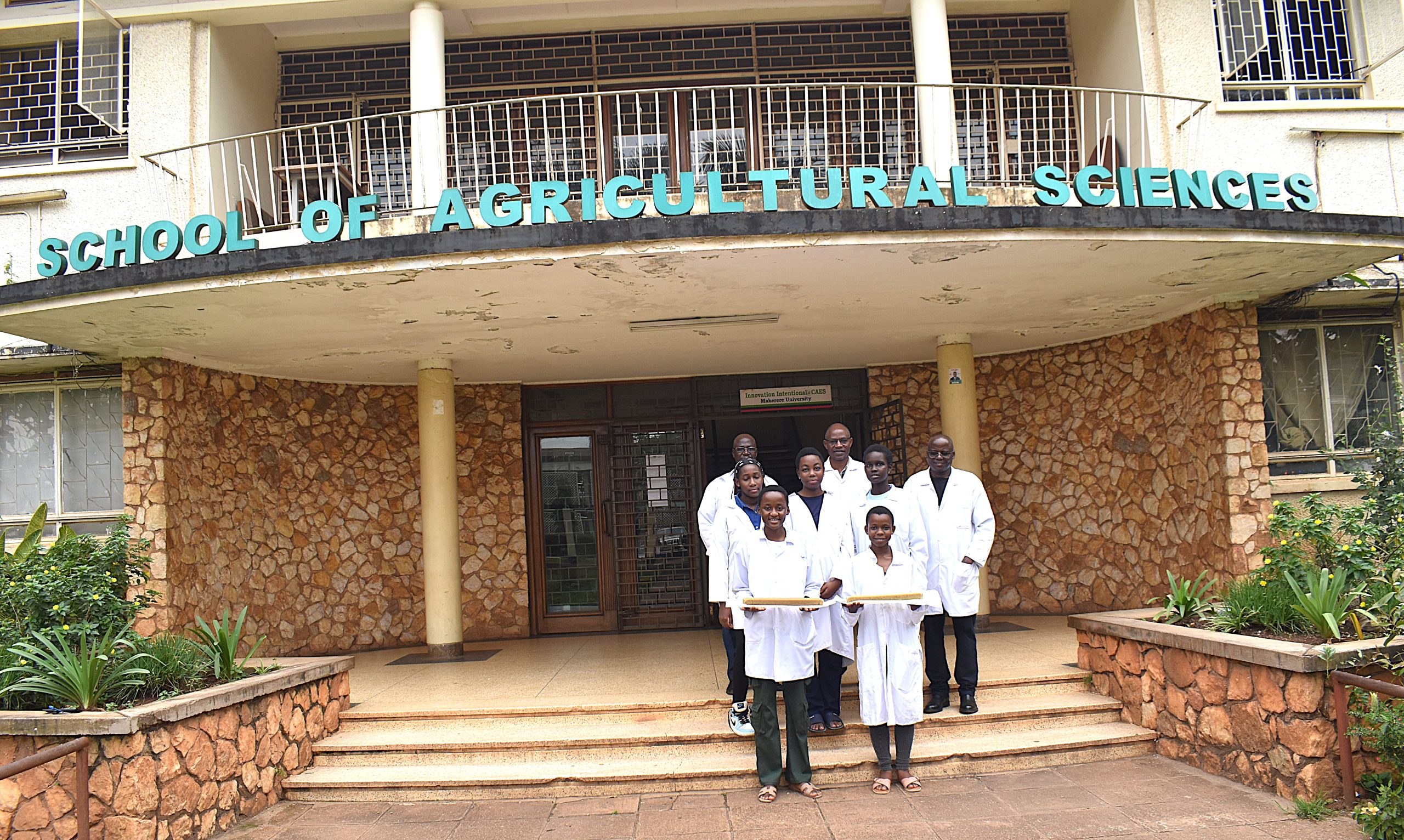
*****The students were supervised by researchers from the College of Agricultural and Environmental Sciences (CAES) at Makerere University, led by Prof. Fred Kabi.
The garbage challenge
With urbanization rates rising rapidly across Uganda, municipal solid garbage generation in the country’s cities is projected to increase by more than 40 percent by 2050. The growing burden of unmanaged garbage, particularly organic garbage, continues to pose environmental and public health risks, underscoring the urgent need for innovative and sustainable solutions.
It is against this backdrop that Senior Four students of Uganda Martyrs Secondary School Namugongo undertook a project to demonstrate how local market garbage challenges can be transformed into opportunities for sustainable development.
Addressing the garbage Challenge
As part of their academic project under the competence-based curriculum, the students were tasked with identifying real-world challenges within their communities and developing practical solutions using locally available resources. Through research and field observations, they identified poor garbage management, particularly the accumulation of organic waste at major dumping sites such as Kiteezi Landfill, as a critical issue.
At these sites, unsorted solid garbage often accumulates uncontrollably, sometimes leading to collapses that pose serious environmental and public health risks including water contamination by leachates, persistent foul odors, and disease outbreaks.
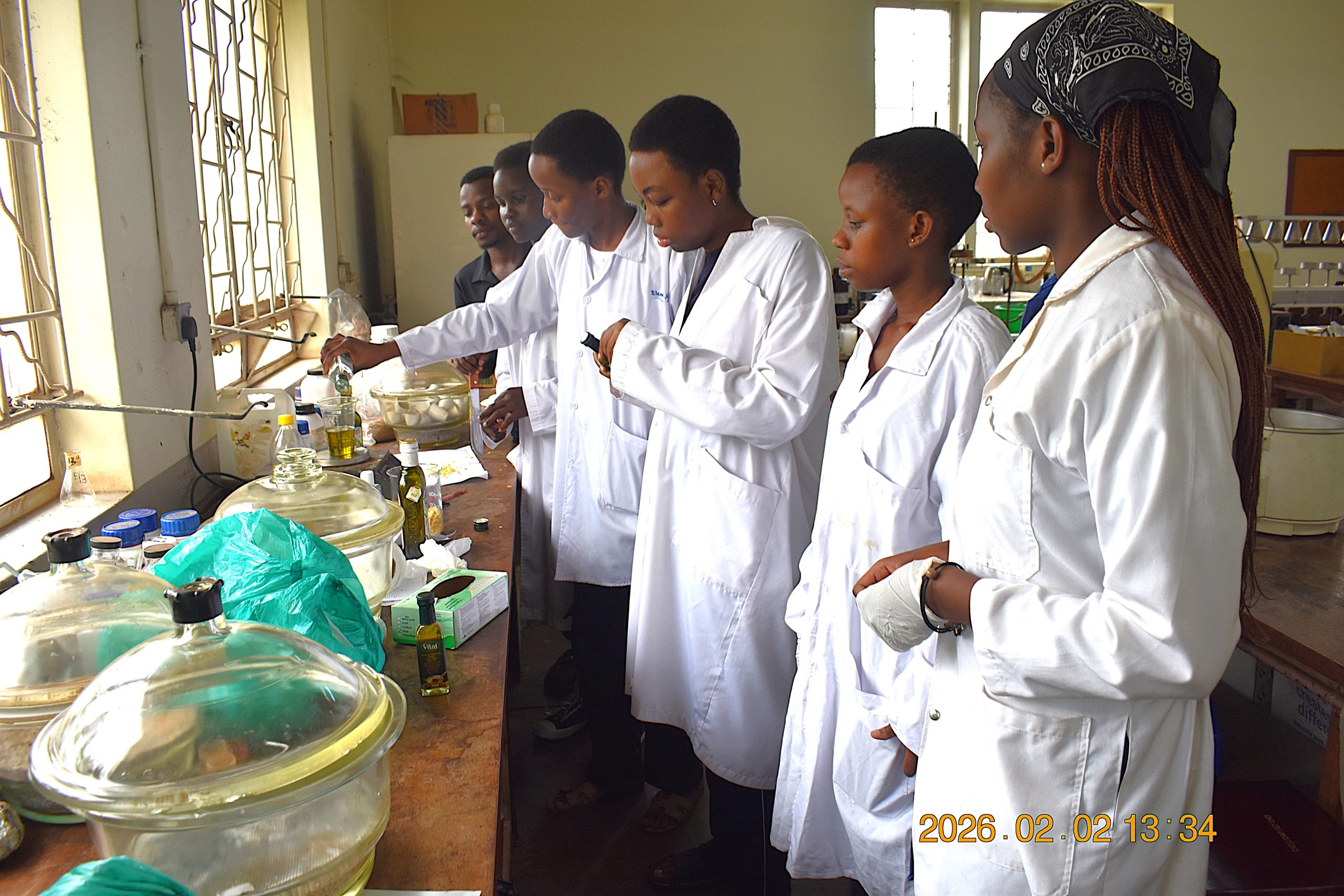
Rather than solely viewing solid market garbage as a problem, the students recognized its untapped potential within the biodegradable fraction of market garbage streams. Their innovative solution was to convert organic solid market waste (biodegradable garbage) into an industrial raw material for soap production by utilizing saprophagous Black Soldier Fly larvae (BSFL) to accumulate lipids and applying the scientific process of saponification.
Makerere University Support to the project
The students’ project was supervised by Prof. Fred Kabi together with technicians from the College of Agricultural and Environmental Sciences (CAES) at Makerere University. Prof. Kabi and his team have been actively researching on Black Soldier Fly Larvae (BSFL) as a bio-waste management technology capable of converting biodegradable solid municipal garbage and farm waste into valuable by-products such as organic fertilizers, animal feeds, soap, and biodiesel.
Working in collaboration with Ento Organic Farm Uganda Ltd, the researchers have demonstrated how insect-based waste conversion systems can support a circular economy by transforming biodegradable waste into industrial raw materials.
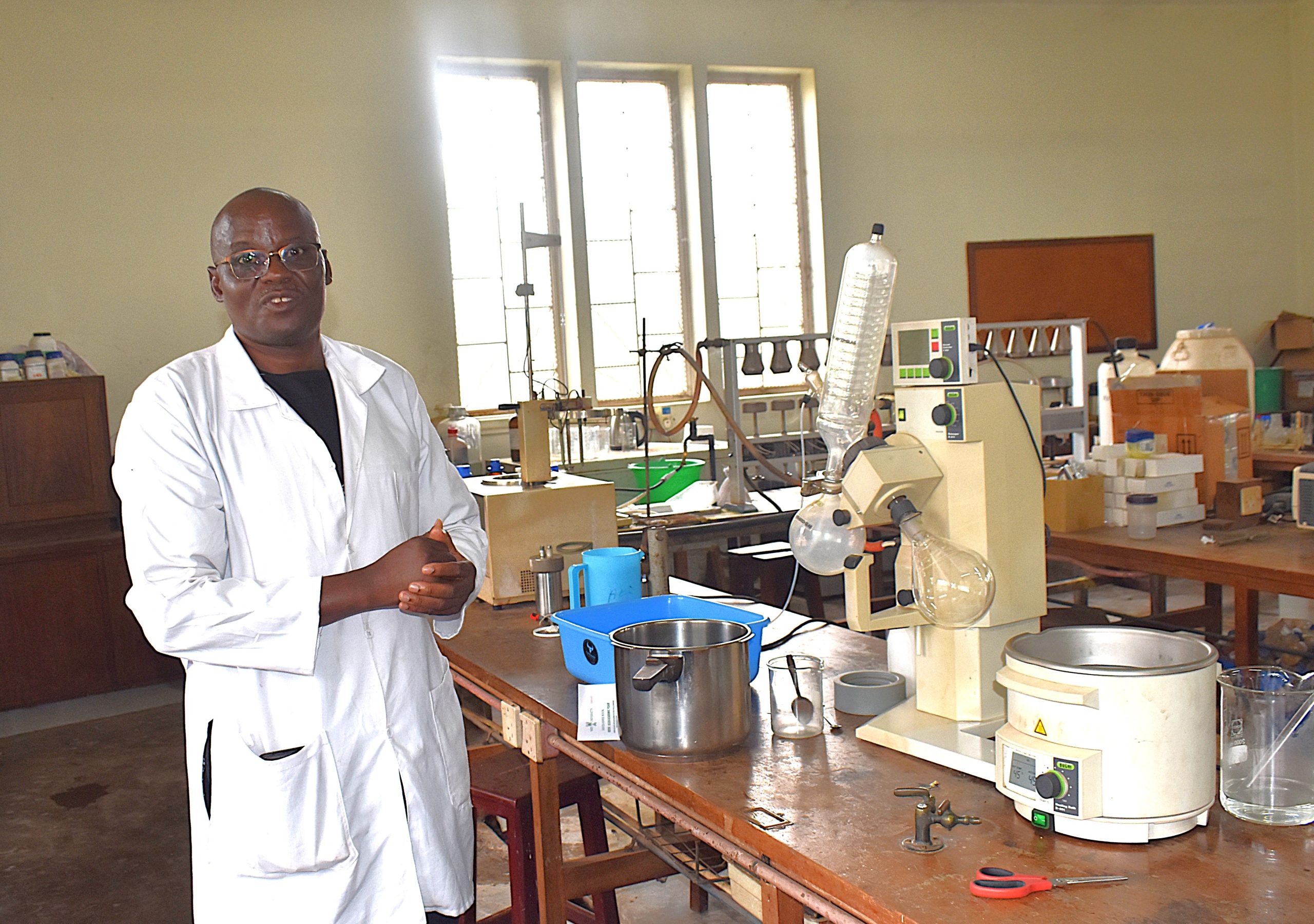
According to Prof. Kabi, the five young garbage entrepreneurs (students) began their project by collecting information on household garbage management practices. After analyzing the data, they engaged stakeholders along the garbage value chain to brainstorm all-inclusive, source-based waste management strategies.
“The students developed a solution that links efficient waste management at garbage generation source to support production of organic fertilizer, insect protein for animal feeds, and soap, which is only possible with biodegradable garbage,” Prof. Kabi explained. “This approach of the Competence Based Curriculum (CBC) for lower secondary schools supports the concept of taking Makerere University to the community of budding scientists while promoting sustainable community development through a circular economy.”
From Market Waste to Soap Bars
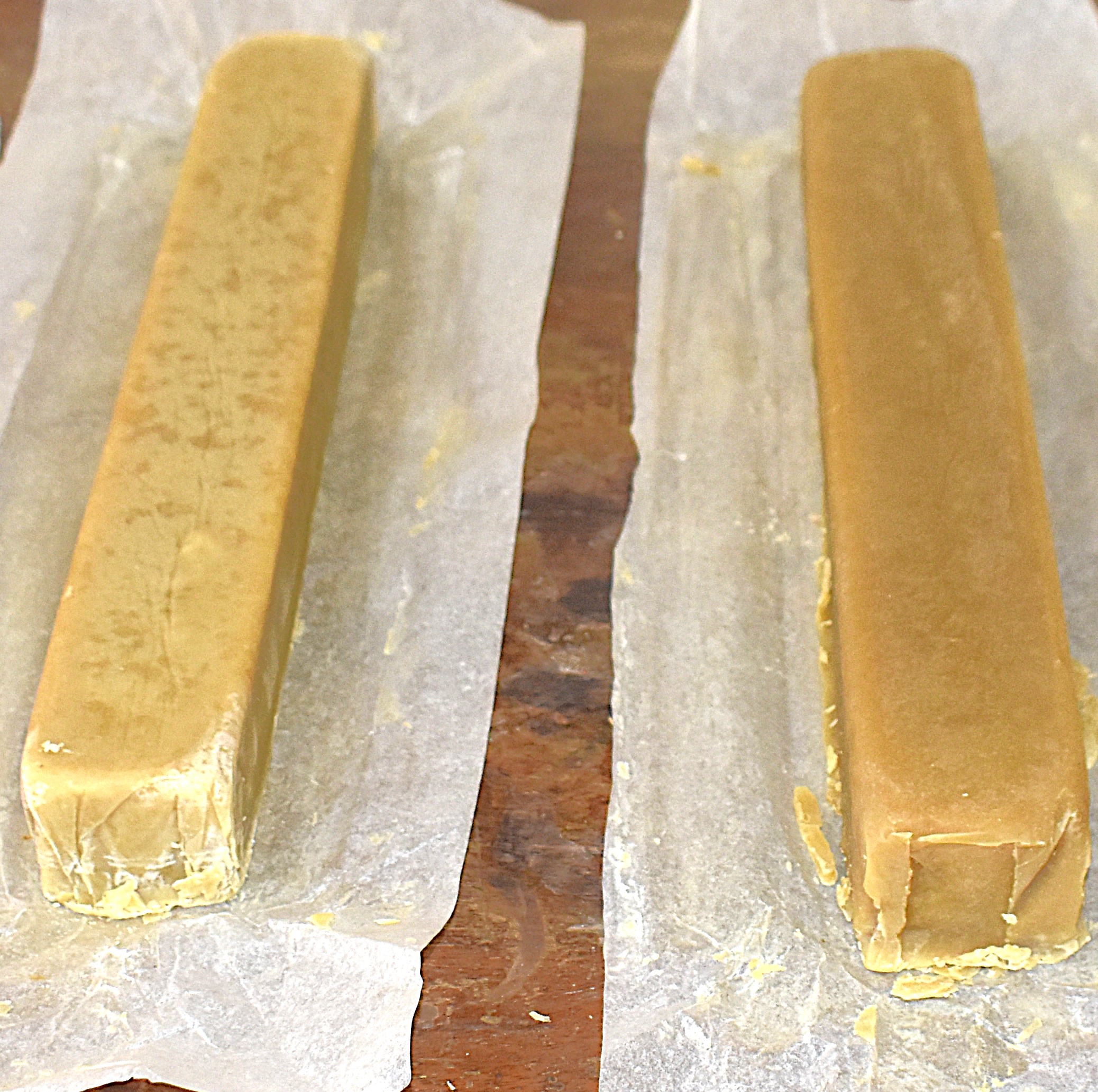
The Team leader, Ms. Ivy Stephanie Kitali explained the step-by-step scientific process behind the project. The students began by collecting organic waste from local markets, which was then shredded to prepare it for the larvae as a substrate. “Black Soldier Fly larvae were then introduced to the prepared waste. The larvae efficiently consumed the organic matter, greatly reducing its volume while accumulating lipids (fats) in their bodies. After maturation, we separated the larvae from the remaining waste, euthanized through blanching and dried it. Oil was then extracted from the dried larvae using ethanol as a solvent. This lipid-rich oil became the primary ingredient or raw material for soap production. To enhance the final product, the larvae oil was blended with minute quantity of sunflower oil before adding sodium hydroxide, initiating saponification, the chemical reaction that transforms fats and oils into soap,” she explained. The process ultimately yielded usable bars of soap derived entirely from what had once been discarded as unwanted market waste/garbage.
Building Skills and Sustainable Innovation
Beyond producing soap, the project provided students with hands-on training in scientific research, waste management techniques, bio-chemistry, and sustainable innovation. They gained practical exposure to insect-based biotechnology and learned how environmental challenges can be addressed through science-driven by entrepreneurship.