
When Immaculate Acom inhaled smoke from traditional firewood stoves, it was a daily struggle. Her eyes watered, her lungs ached, and cooking became a source of illness rather than nourishment.
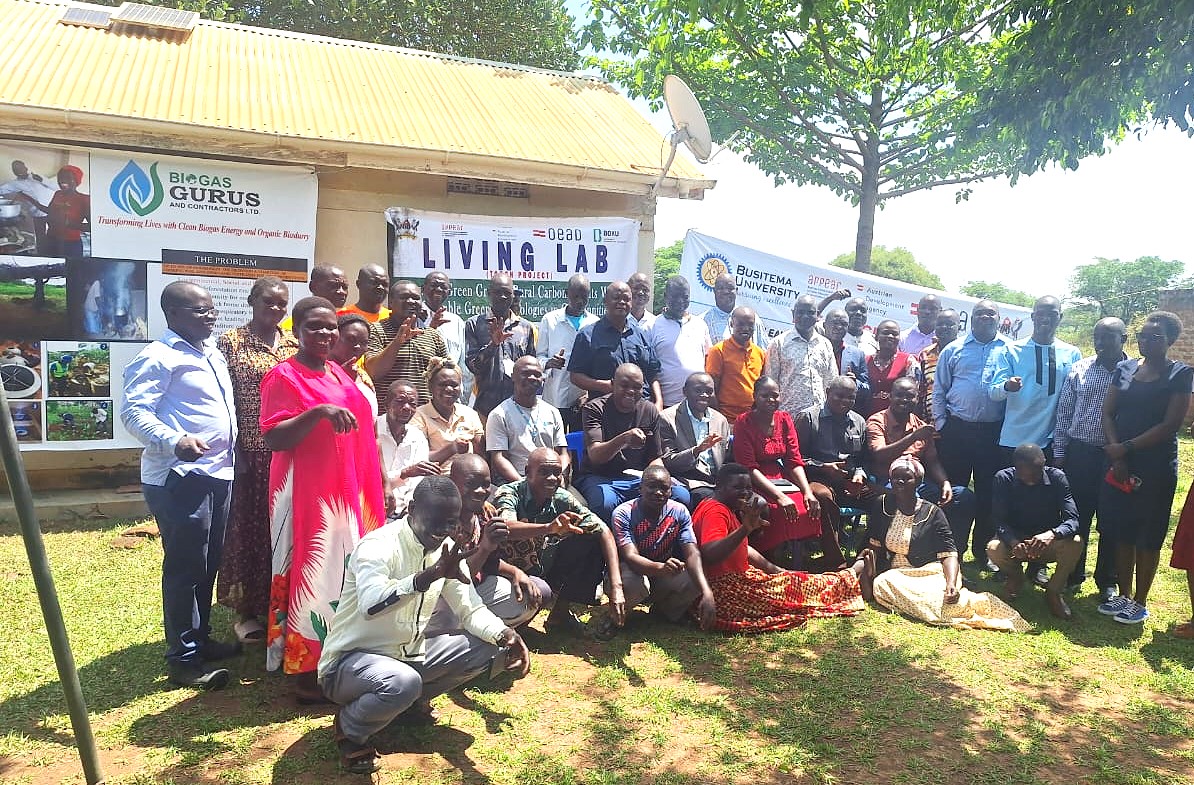
Today, Acom’s home in Aten Village, Odudui Parish, Arapai Sub-county, Soroti District, has transformed into a living laboratory for green energy solutions, a hub where university researchers, students, and local farmers collaborate on practical strategies to combat climate change.
“I used to cough every time I cooked. Now, with a biogas digester built by my husband, I can cook and light our home safely,” she says, pointing to the small green dome beside her house. “This is a relief for all the mothers in the community.”
Bringing Academia to the Grassroots
Acom’s story is part of the TORCH Project, a multi-university initiative involving Makerere University, Busitema University, Kabale University, and the University of Juba. The project seeks to reduce greenhouse gas emissions and promote sustainable practices at the community level.
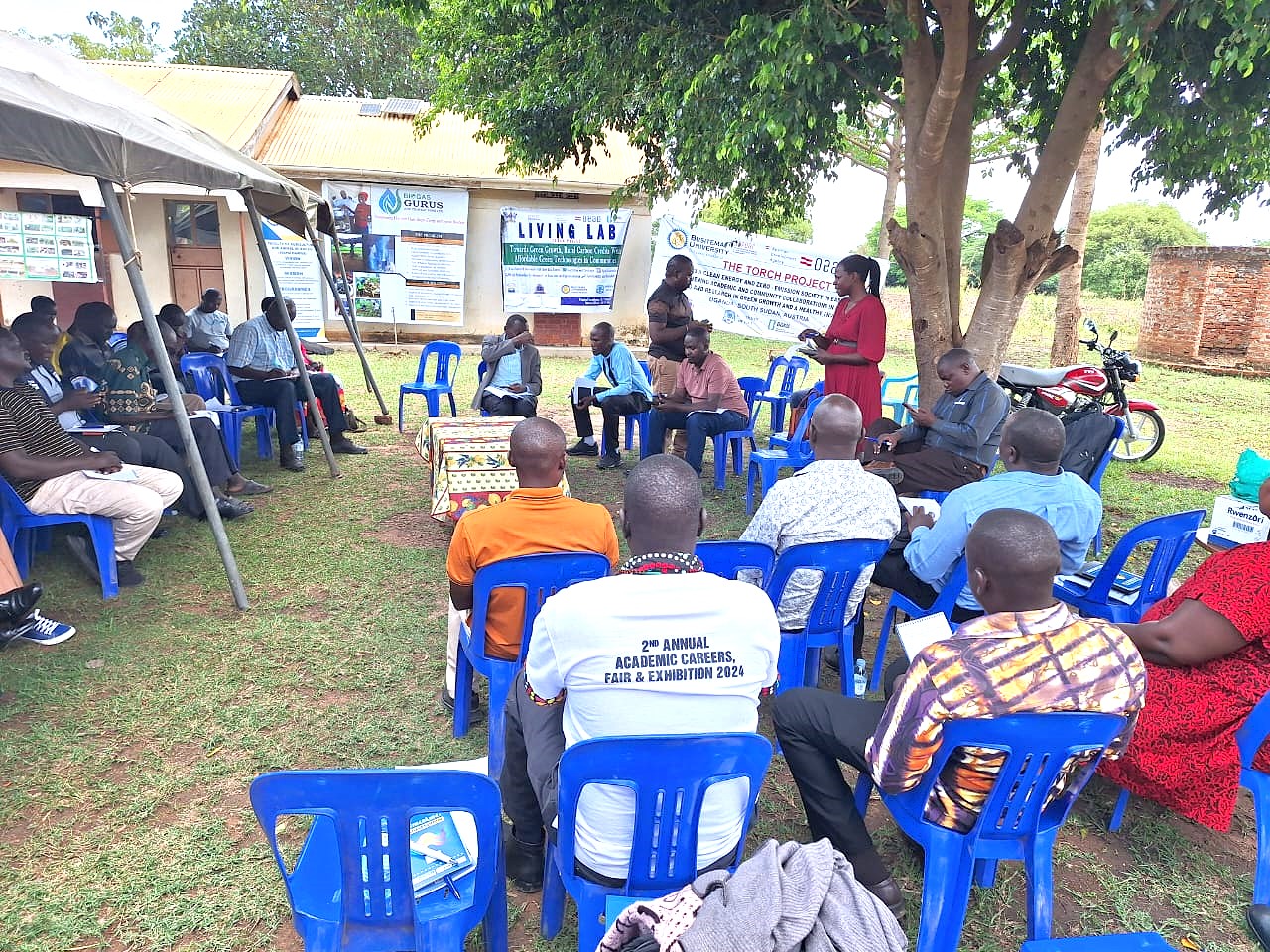
Unlike conventional environmental campaigns, the TORCH Project emphasizes direct engagement with local communities. Role models within villages are identified and trained in modern agricultural practices, clean energy use, and environmentally friendly living standards.
Dr. Jolly Akullo Oder, TORCH Project Coordinator at Busitema University, explains:
“Our mandate is to go to the community, share knowledge, listen to their challenges, and co-create solutions. This is not about lecturing – it’s about learning together.”
The project’s operational area spans a ten-square-kilometer zone around Busitema University’s Arapai campus, where researchers, students, and community members meet regularly to exchange ideas and implement practical solutions.
A Living Lab for Green Growth
The initiative, branded as a living lab, aims to achieve green growth, rural carbon credits, and the adoption of affordable green technologies.
Dr. Patrick Musinguzi, Principal Investigator from Makerere University, emphasizes the community-centric approach: “We are here to sit at the table with the community, discuss the challenges of global warming and greenhouse gas emissions, and chart a path forward together. Awareness is the first step to action.”
The project focuses on tangible interventions, including biogas digesters, sustainable tree planting, and energy-efficient farming methods, to reduce carbon emissions at the household and community level.
Community Voices: From Awareness to Action
For local farmers like John Michael Elebu, the university outreach is both eye-opening and practical. “I’ve never seen academics come to the community and engage with us so openly. I hope they can provide free improved tree seedlings to support our farming and fight climate change,” Elebu said.
Acom urges men in the community to take an active role in adopting clean energy technologies. Her husband, David Okwi, is among those championing the integration of green technologies into everyday agricultural practices.
“Promoting renewable energy and sustainable farming isn’t just about protecting the environment,” Okwi says. “It also improves health, saves money, and strengthens the resilience of our families.”
Universities as Catalysts for Environmental Change
The TORCH Project represents a unique model of academic-community collaboration, where research and practical application intersect.
Universities provide expertise, training, and access to modern technologies.
Community members contribute local knowledge, labor, and willingness to adopt change.
Together, they tackle climate change, energy poverty, and environmental degradation at the grassroots.
Dr. Akullo notes that the initiative will expand its activities continuously, monitoring outcomes, adapting approaches, and scaling up best practices across Teso and neighboring regions.
Way forward
By turning households into living laboratories, the TORCH Project aims to bridge the gap between knowledge and action.
For residents like Acom and Okwi, the benefits are immediate: cleaner air, reduced health risks, and practical solutions for everyday life. For Teso, the project could serve as a blueprint for climate-smart rural development across East Africa.
“Change begins at home,” Dr. Musinguzi says. “When communities understand the challenges of green gas emissions and know how to respond, the impact spreads far beyond one village or household.”
In Aten Village, the hum of a biogas stove and the sight of thriving tree seedlings offer a glimpse of what is possible when universities partner with communities, creating hope for a cleaner, healthier, and more sustainable future.
Final Article on Green Gas Emissions xxxx
By John Omoding